Bedroom
Small Home Office Makeover: 15 Before-and-After Ideas for a Stylish and Productive Workspace
A small home office can become brighter, more organized, and more inspiring without requiring a complete renovation. Explore practical ideas for transforming an overlooked workspace with better lighting, floating shelves, thoughtful storage, comfortable furniture, and simple decor
Small Home Office Makeover: 15 Before-and--After Ideas for a Stylish and Productive Workspace
A home office does not need to be large to feel comfortable, organized, and inspiring. Even a narrow wall, an unused alcove, or a small corner can become a beautiful workspace when every design choice serves a clear purpose.
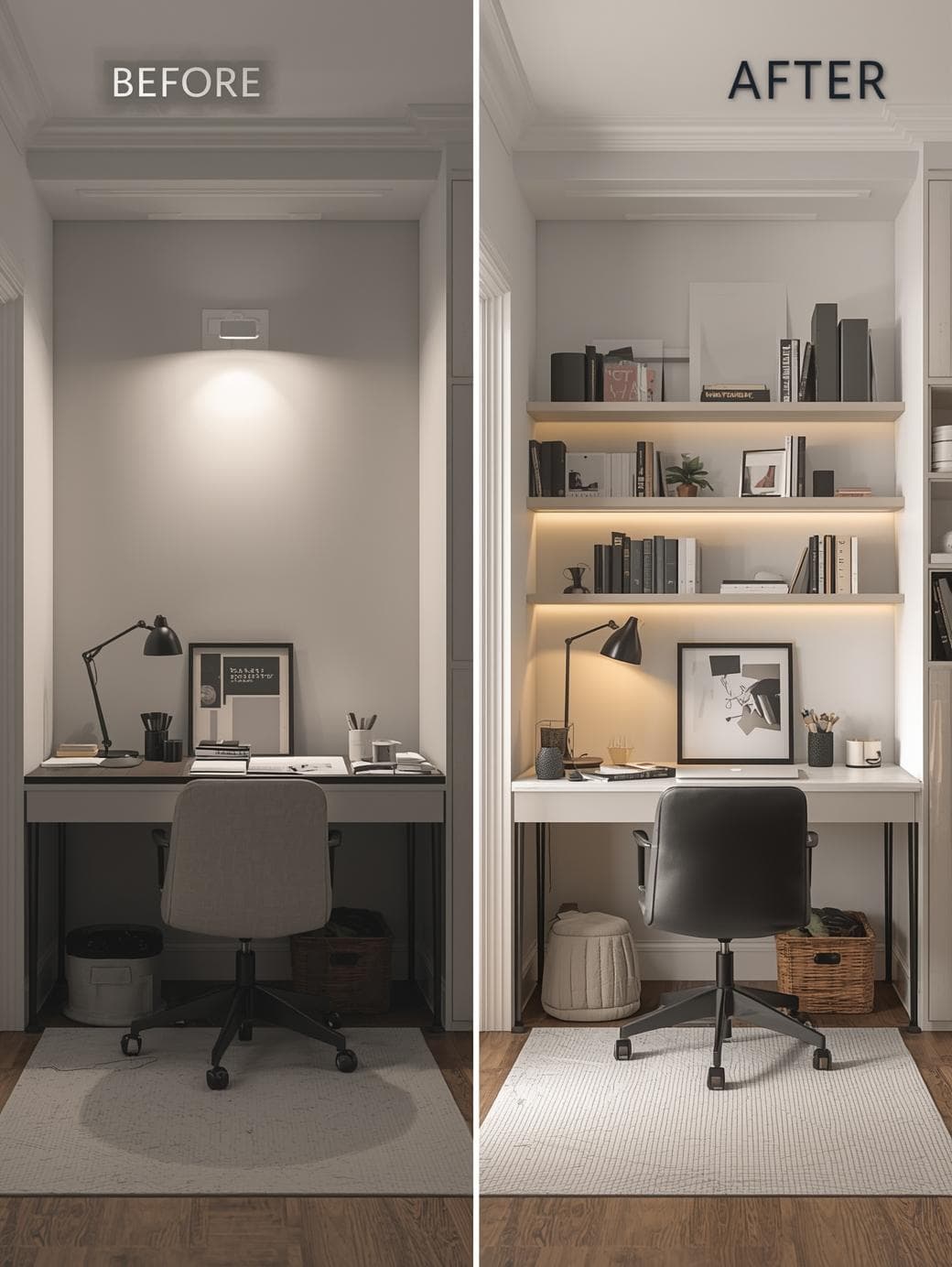
This before-and-after home office transformation shows how a few thoughtful changes can dramatically improve both the appearance and function of a compact workspace. The original office already had the essentials: a desk, a chair, a task lamp, and a place to work. However, the large empty wall made the space feel unfinished, while limited lighting and visible clutter reduced its sense of comfort.
In the transformed office, floating shelves use the previously empty vertical space, warm lighting creates a welcoming atmosphere, and better organization gives every item a place. The result feels brighter, more intentional, and easier to use without requiring a larger room.
If your home office feels dark, cluttered, plain, or uninspiring, these small home office makeover ideas can help you create a workspace that supports productivity while still feeling like a natural part of your home.
Start by Understanding What Is Not Working
Before buying new furniture or adding more decor, identify the problems affecting your current workspace.
Ask yourself whether the desk provides enough working space, whether the lighting is comfortable, and whether frequently used items are easy to reach. Look for areas that feel empty, cluttered, dark, or underused.
In many small offices, the problem is not a lack of space. It is that the available space has not been used efficiently.
For example, a large blank wall above a desk may seem like a design problem, but it is also an opportunity. Adding shelves can create storage without taking up valuable floor space. Similarly, a dark workspace may not need new furniture—it may simply need layered lighting.
Understanding the specific problems first helps you make changes that improve both style and function.
Use Vertical Space with Floating Shelves
One of the most noticeable changes in this home office makeover is the addition of floating shelves above the desk.
Floating shelves are especially useful in small home offices because they provide storage and display space without making the floor feel crowded. They can hold books, notebooks, framed artwork, small plants, storage boxes, and decorative objects.
For a balanced appearance, avoid filling every section of the shelves. Leave some open space between objects so the arrangement feels intentional rather than cluttered.
Place frequently used books and supplies on the lower shelf, where they are easier to reach. Reserve higher shelves for decorative items, framed prints, or objects that are used less often.
The shelves should feel like an extension of the workspace rather than a separate decorative feature.
Add Warm Lighting Beneath the Shelves
Lighting can completely change how a home office feels.
The original workspace relies mainly on a small desk lamp and limited overhead lighting. In the transformed office, warm lighting beneath the floating shelves adds depth and creates a softer atmosphere.
Under-shelf LED lighting is a practical choice because it provides gentle illumination without using desk space. It can also highlight books, artwork, and decorative objects while making the wall feel more visually interesting.
Choose warm-white lighting rather than very cool or blue-toned light if you want the office to feel comfortable and inviting.
For tasks that require concentration, combine ambient lighting with a focused desk lamp. This layered approach creates a workspace that remains functional during the day and comfortable in the evening.
Keep a Dedicated Task Lamp
Decorative lighting creates atmosphere, but a task lamp provides focused light where you need it most.
An adjustable desk lamp can help reduce eye strain while reading, writing, drawing, or working on detailed projects. Position the lamp so it illuminates the desk without creating distracting reflections on your computer screen.
If you are right-handed, placing the lamp on the left side can help reduce shadows while writing. If you are left-handed, placing it on the right may work better.
Choose a lamp with a simple shape and a finish that complements the rest of the office. Black, brass, white, and warm metal finishes work well in many modern home offices.
Create a Clear Visual Focal Point
Every well-designed room benefits from a focal point.
In a small home office, the desk wall naturally becomes the center of attention. Floating shelves, framed artwork, books, and warm lighting can help turn this wall into a cohesive design feature.
The transformed office uses a balanced arrangement rather than one large decorative object. Books create structure, framed art adds personality, and small accessories introduce texture.
You do not need to make every shelf perfectly symmetrical. A slightly varied arrangement often feels more natural and lived-in.
The goal is to create visual interest without making the workspace distracting.
Choose a Desk That Fits the Space
A small home office needs a desk that provides enough room to work without overwhelming the area.
Measure the available width and depth before choosing a desk. Make sure there is enough room to move the chair comfortably and access nearby storage.
A desk with slim legs can make a compact workspace feel more open because more of the floor remains visible. Light-colored desks can also help brighten a small room.
If storage is essential, choose a desk with shallow drawers rather than bulky cabinets. This keeps stationery and documents nearby while preserving legroom.
The best desk is not necessarily the largest one. It is the desk that supports your daily work while fitting comfortably within the room.
Improve Comfort with an Ergonomic Chair
A beautiful office should also be comfortable.
If you spend several hours working or studying, choose a chair that supports your posture. Look for adjustable height, comfortable cushioning, supportive armrests, and a backrest that encourages a natural sitting position.
The chair should allow your feet to rest comfortably on the floor while your elbows remain close to desk height.
In a small office, a chair with a streamlined design can provide comfort without visually dominating the room.
Neutral upholstery, black finishes, and simple silhouettes are versatile choices that work with many interior styles.
Organize the Desk Around Your Daily Routine
A productive desk should make frequently used items easy to access.
Keep essentials such as pens, notebooks, chargers, and headphones nearby. Store less frequently used supplies in drawers, baskets, or containers.
Instead of covering the desk with multiple organizers, choose one or two simple storage pieces. A pencil holder, document tray, or small drawer unit may be enough.
At the end of each workday, return items to their designated places. A quick reset can prevent clutter from building up and make the workspace more inviting the next morning.
Hide Visual Clutter with Baskets
Storage baskets add warmth and texture while keeping everyday items out of sight.
In this office transformation, a woven basket beneath the desk provides practical storage without making the workspace feel overly formal. It can hold cables, notebooks, extra stationery, technology accessories, or small office supplies.
Choose baskets that fit comfortably beneath the desk or beside a shelving unit. Avoid placing too many storage containers in a small room, as they can reduce available floor space.
Natural woven materials work especially well in neutral offices because they soften clean lines and introduce an organic texture.
Use Books as Both Storage and Decor
Books are practical, but they can also become an important part of the room’s design.
Arrange books vertically for a traditional library appearance, then add a few horizontal stacks to create variation. A small decorative object or framed print can be placed on top of a horizontal stack.
You can organize books by subject, size, or color depending on the style you prefer.
Avoid arranging every book too precisely. A slightly relaxed display can make the office feel more comfortable and personal.
Add Artwork Without Overcrowding the Wall
Artwork can make a home office feel more inspiring, but too many pieces may create visual distraction.
Choose one larger print or a small collection of simple framed images. Neutral artwork, architectural sketches, abstract designs, and typography can complement a modern workspace.
Instead of hanging every frame, consider leaning some artwork against the wall on a shelf. This creates a more relaxed look and makes it easier to update the display later.
Select pieces that reflect your interests or encourage creativity rather than choosing artwork only because it matches the room.
Introduce a Small Amount of Greenery
Plants can add color and life to a neutral home office.
A small potted plant on a shelf or desk may be enough to soften the space. If natural light is limited, choose low-maintenance varieties that can tolerate indoor conditions.
Avoid placing large plants where they interfere with movement or reduce valuable desk space.
If caring for plants is difficult, high-quality artificial greenery can provide a similar visual effect with minimal maintenance.
Use a Neutral Color Palette to Make the Office Feel Larger
Light and neutral colors can make a compact workspace feel brighter and more open.
Warm white, soft gray, beige, cream, taupe, and natural wood create a calm foundation. Black accents can add contrast and prevent the room from feeling flat.
A neutral palette also makes it easier to update the office over time. You can introduce new colors through artwork, books, cushions, or small accessories without replacing the main furniture.
To keep a neutral room interesting, use a variety of textures rather than relying on many different colors.
Add a Soft Rug for Comfort and Definition
A rug can visually define the workspace, especially when the office is located in a bedroom, living room, or open-plan area.
Choose a rug large enough for the chair to move without constantly catching on the edges. Low-pile rugs are usually easier to use with rolling office chairs.
Neutral patterns can add subtle detail while keeping the room calm. A soft rug also improves comfort and helps the workspace feel more finished.
Keep Cables Hidden and Organized
Visible cables can make even a carefully styled desk feel cluttered.
Use cable clips to guide charging wires along the back of the desk. An under-desk cable tray can hold power strips and adapters away from the floor.
Label frequently used cables if several devices are connected in the same area.
Wireless accessories may also reduce visual clutter, but they are not essential. Simple cable management can make a significant difference without requiring new technology.
Make the Office Feel Personal
Minimal design should not make a workspace feel impersonal.
Add a few meaningful details, such as a favorite book, framed photograph, travel object, artwork, or small decorative piece.
The key is moderation. Choose items that make the office feel motivating or comfortable without covering every available surface.
A workspace should reflect the person using it while remaining functional enough to support daily routines.
Avoid Decorating Every Empty Space
Empty space is an important part of interior design.
You do not need to fill every shelf, wall, or corner. Leaving some open areas gives the eye a place to rest and allows important objects to stand out.
In a small office, too much decor can quickly make the room feel crowded. Begin with a few useful and meaningful items, then add more only if the space still feels incomplete.
A carefully edited workspace often feels more polished than one filled with accessories.
Create a Workspace That Supports Focus
The appearance of a home office matters, but the space should ultimately help you work, study, or create more comfortably.
Reduce unnecessary distractions, keep essential tools within reach, and create a consistent place for important items.
If possible, avoid using the desk as long-term storage. Keeping the main working area clear makes it easier to begin tasks without first moving piles of objects.
A well-organized office can reduce small daily frustrations and help create a more consistent work routine.
How to Recreate This Home Office Makeover
Begin by clearing the desk and removing anything that does not support your work.
Next, improve the lighting with a task lamp and warm ambient lighting. Use the empty wall above the desk by adding floating shelves or a compact wall-storage system.
Organize books and supplies, then add a few personal details such as framed artwork, a small plant, or a decorative object.
Use a basket or drawer to hide items that create visual clutter. Finally, add a comfortable chair and a soft rug to make the workspace feel complete.
You do not need to make every change at once. Start with the improvements that solve the biggest problems, then develop the room gradually.
Final Thoughts
This before-and-after home office makeover demonstrates how thoughtful design can transform a small and overlooked workspace.
The desk itself did not require a dramatic change. Instead, the transformation came from using vertical space, improving the lighting, organizing everyday items, and adding carefully selected decor.
Floating shelves made the empty wall functional. Warm lighting created depth and comfort. Better storage reduced clutter, while artwork and books added personality.
Whether your office is located in a separate room, a bedroom corner, or a narrow alcove, small improvements can make it feel more organized, comfortable, and inspiring.
Save these small home office makeover ideas for your next workspace refresh, and explore more interior design inspiration from Vikore Vana.
Enjoyed This
Article
Enjoyed this look? Share it