Living Room
How Photo Frames and Floating Shelves Can Transform an Empty Wall
Discover how photo frames and floating shelves can transform a plain wall into a stylish focal point. Learn practical gallery wall ideas, shelf styling tips, lighting techniques, and common decorating mistakes to avoid.
How Photo Frames and Floating Shelves Can Transform an Empty Wall
A beautiful sofa and carefully chosen furniture can create a strong foundation for a living room, but an empty wall may still make the space feel incomplete. Walls occupy a large part of what we see in a room, which means thoughtful wall decor can significantly influence the overall atmosphere.
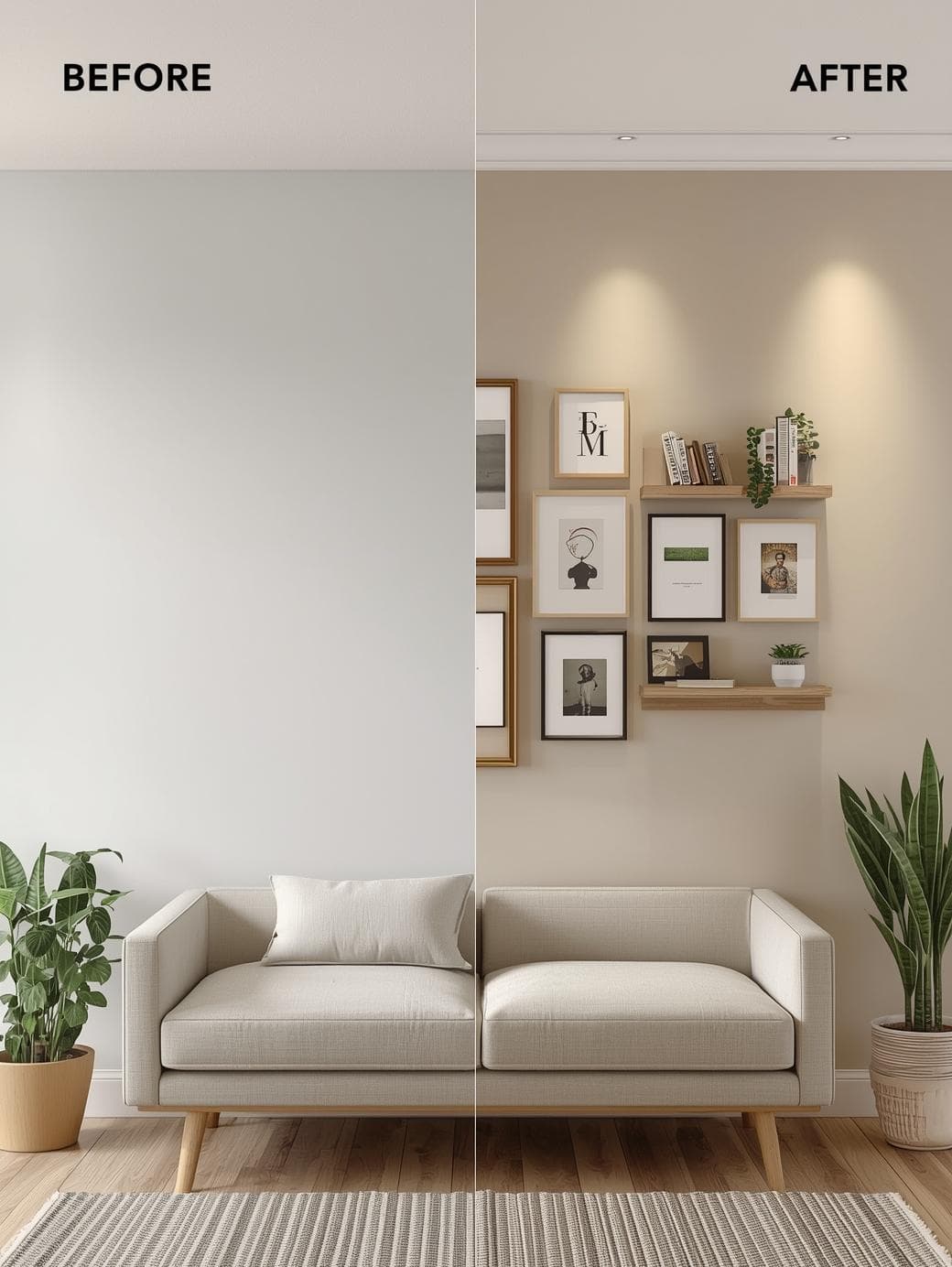
This before-and-after transformation shows how photo frames, floating shelves, books, plants, and warm lighting can turn a plain wall into an attractive focal point.
The furniture remains almost the same, yet the finished room feels warmer, more personal, and visually balanced. This demonstrates that a meaningful transformation does not always require new furniture, expensive renovations, or dramatic changes.
Sometimes, the right wall decor is enough to give a room character.
Why Empty Walls Can Make a Room Feel Unfinished
Minimalism does not mean every wall needs to remain empty.
A blank wall can create valuable visual breathing room, but when a large wall sits above a sofa, bed, desk, or console table, it may make the furniture below feel disconnected from the rest of the room.
Wall decor helps connect the upper and lower portions of a space. It draws the eye upward, adds visual interest, and creates a more complete composition.
The goal is not to cover every empty surface. Instead, choose one important wall and decorate it with intention.
Use Photo Frames to Add Personality
Photo frames are one of the easiest ways to make a home feel personal.
They can display family photographs, travel memories, artwork, illustrations, architectural prints, meaningful quotes, or abstract designs. Unlike temporary decor trends, framed pieces can tell a story about the people who live in the home.
For a modern appearance, combine neutral artwork with a limited selection of frame finishes. Black frames add contrast, while natural wood frames introduce warmth. White or light-colored frames can create a softer look.
Using two or three related frame colors often feels more interesting than making every frame identical.
Create a Balanced Gallery Wall
A gallery wall can become the main focal point of a living room, but the arrangement should feel connected rather than random.
Begin by selecting one larger frame as the visual anchor. Place smaller frames around it while maintaining relatively consistent spacing.
Mix vertical and horizontal artwork to create variety. You can also combine different frame sizes to make the display feel more natural.
Before making holes in the wall, arrange the frames on the floor or create paper templates. Move the pieces until the overall composition feels balanced.
The arrangement does not need to be perfectly symmetrical. A slightly asymmetrical layout can feel relaxed and creative while still appearing intentional.
Add Floating Shelves for Style and Function
Floating shelves provide more flexibility than framed artwork alone.
They can hold books, plants, ceramics, candles, photographs, and small decorative objects. Because the items are not permanently attached to the wall, the display can be updated throughout the year.
In this transformation, wooden floating shelves introduce warmth and connect naturally with the wood flooring and sofa legs.
Shelves also add horizontal lines that balance the vertical arrangement of the frames. This combination gives the wall more structure and depth.
Combine Photo Frames and Shelves
Photo frames and floating shelves work especially well when used together.
Frames create height and personality, while shelves add texture and practical display space. The combination prevents the wall from feeling too flat.
Place some artwork directly on the wall and lean smaller frames against the wall on a shelf. This creates a layered appearance and makes the display feel less formal.
Avoid placing every frame at the same height. Slight variations can make the arrangement more dynamic.
Keep enough space between the frames and shelves so each element remains visible.
Use Books as Decorative Elements
Books can add color, character, and height to floating shelves.
Arrange some books vertically and place others in small horizontal stacks. A plant, framed photograph, or decorative object can sit beside or on top of a stack.
Choose books you genuinely enjoy rather than using them only as decoration. A beautiful wall should still reflect your interests and daily life.
Avoid filling the entire shelf with books. Leaving some open space helps individual objects stand out and prevents the display from feeling crowded.
Add Greenery to Soften the Wall
Plants introduce natural color and soften the straight lines created by shelves and frames.
A trailing plant can create gentle movement as its leaves extend below a shelf. Small potted plants can fill gaps without adding too much visual weight.
If the wall receives limited natural light, choose plants suited to lower-light conditions or use high-quality artificial greenery.
Repeat greenery elsewhere in the room to create balance. In this space, the larger floor plant visually connects with the smaller plants displayed on the shelves.
Use Warm Lighting to Highlight the Display
Lighting can make wall decor feel more intentional.
The spotlights in the transformed room create soft pools of light above the frames and shelves. This adds depth and draws attention to the wall without requiring additional decoration.
Picture lights, adjustable spotlights, wall sconces, or hidden LED strips can produce a similar effect.
Choose warm lighting for living rooms and bedrooms when you want a comfortable atmosphere. Very cool lighting may make neutral walls feel harsh.
Lighting should enhance the display rather than overpower it.
Keep the Colors Connected to the Room
A gallery wall should feel like part of the interior rather than a separate collection.
Repeat colors already present in the room. Neutral artwork can connect with a beige sofa, while wood frames can complement flooring, shelves, and furniture legs.
Small amounts of black can add contrast and definition.
You do not need to match every color exactly. A cohesive palette simply creates a visual relationship between the wall decor and the rest of the room.
Choose the Right Height Above the Sofa
Wall decor should feel connected to the furniture beneath it.
If frames and shelves are placed too high, they may appear to float separately from the sofa. If they are too low, the arrangement can feel crowded.
Leave enough space above the sofa for visual comfort while keeping the lowest part of the display close enough to form one composition.
Consider the total height of the arrangement rather than positioning each frame individually.
Before installing shelves, also make sure there is enough clearance for people sitting beneath them.
Avoid Overcrowding the Wall
Adding more decor does not always create a better result.
Too many frames, books, plants, and accessories can make a small room feel visually cluttered.
Leave open areas between objects and avoid filling every section of each shelf. Empty space gives the eye a place to rest and allows meaningful pieces to receive more attention.
Begin with fewer objects, then add details gradually. It is easier to add another frame later than to simplify an overcrowded display.
How to Recreate This Wall Makeover
Start by measuring the width of the sofa and the available wall space.
Choose a collection of artwork or photographs with related colors. Select a mixture of frame sizes and limit the design to a few complementary finishes.
Add one or two wooden floating shelves for books, small plants, and decorative objects.
Arrange everything on the floor before installing it. Use paper templates or painter’s tape to test the placement on the wall.
Keep the spacing consistent, leave some open areas, and make sure the entire arrangement feels connected to the sofa.
Complete the transformation with warm lighting to highlight the display and create a comfortable evening atmosphere.
Final Thoughts
Photo frames and floating shelves can transform a plain wall without changing the main furniture or renovating the entire room.
Frames add personality and meaning, while shelves provide texture, flexibility, and useful display space. Books and plants bring warmth, and thoughtful lighting gives the arrangement greater depth.
The most successful wall displays are not necessarily the largest or most expensive. They feel balanced, personal, and connected to the room around them.
Choose pieces that reflect your interests, leave enough open space, and build the arrangement gradually. A thoughtfully decorated wall can make the entire room feel warmer, more complete, and uniquely yours.
Save these wall decor ideas for your next living room makeover and explore more interior inspiration from Vikore Vana.
Enjoyed This
Article
Enjoyed this look? Share it