Small Spaces
21 Small Studio Apartment Ideas to Make One Room Feel Bigger and More Beautiful
A small studio apartment can feel spacious, comfortable, and beautifully organized with the right layout. Discover smart ways to arrange your bed, living area, kitchen, storage, lighting, and decor while making every corner work harder.
21 Small Studio Apartment Ideas to Make One Room Feel Bigger and More Beautiful
Living in a studio apartment does not mean choosing between comfort, function, and style. Although a studio combines the bedroom, living room, and often the kitchen into one open space, thoughtful design can make each area feel intentional and surprisingly spacious.
The key is not simply adding smaller furniture. A successful studio apartment uses every part of the room carefully. The layout should support daily life, storage should blend naturally into the design, and each piece of furniture should contribute to the overall function of the home.
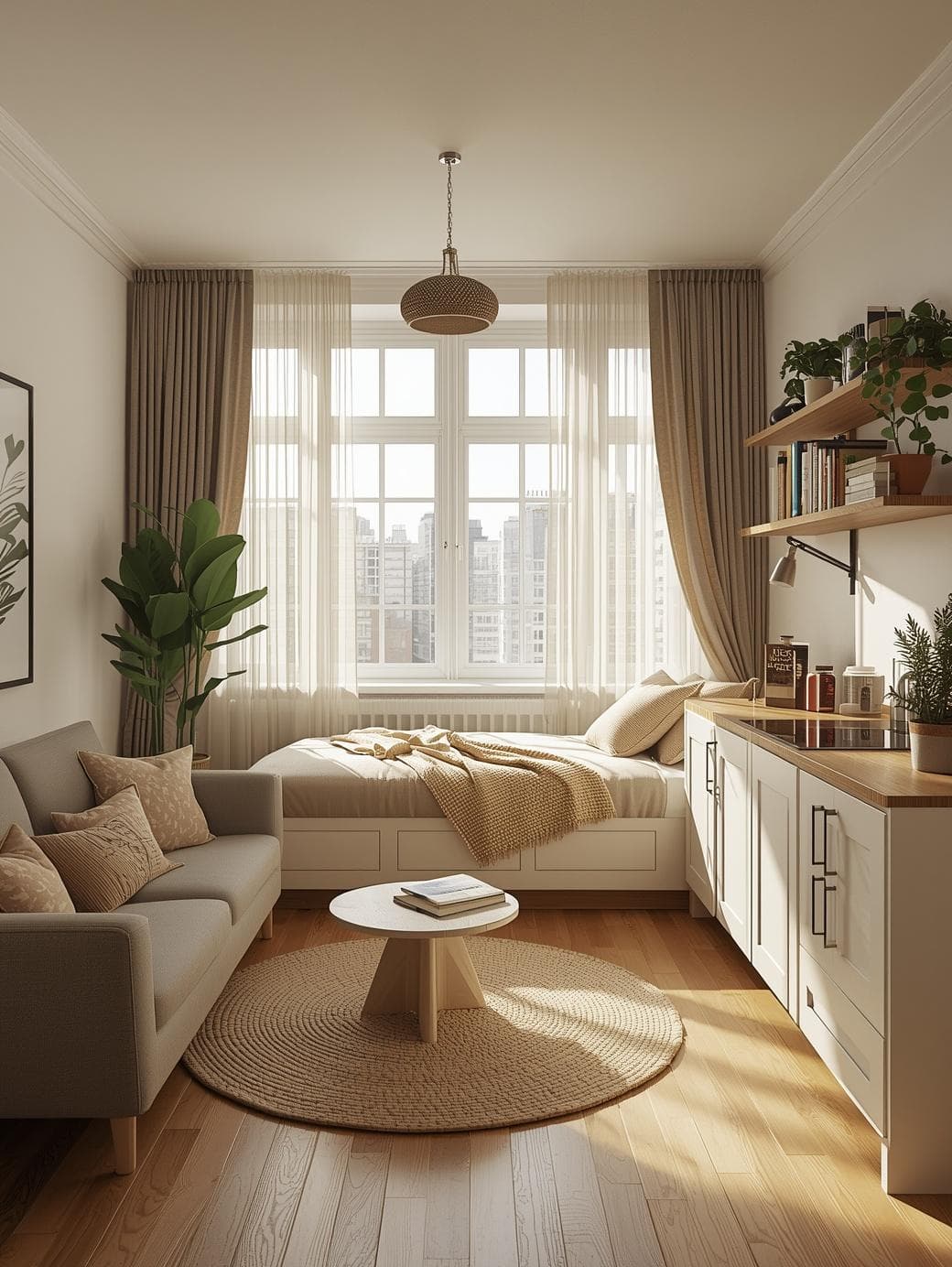
This warm, light-filled studio is a beautiful example of how one room can serve several purposes without feeling crowded. The bed is positioned near the large window, allowing natural light to become part of the sleeping area. A compact sofa creates a comfortable living zone, while a small round coffee table keeps movement through the room open.
Along the opposite wall, white cabinetry provides essential kitchen storage without visually overwhelming the apartment. Warm wood flooring, soft neutral fabrics, indoor plants, and layered curtains bring the entire space together.
Whether you are decorating your first apartment, redesigning a rental, or searching for ways to make a small home feel larger, these studio apartment ideas can help you create a space that is practical, peaceful, and personal.
Begin with a Layout That Supports Your Daily Routine
Before choosing furniture or decorating the walls, think about how you use your home throughout the day.
Do you work from home? Do you cook frequently? Do you need a comfortable place for guests? Do you spend more time relaxing on the sofa or working at a desk?
Your answers should influence the layout.
A person who works remotely may need to prioritize a dedicated workspace, while someone who enjoys cooking may benefit from additional kitchen storage and preparation space. If you frequently invite friends over, a comfortable seating area may be more important than a large bed.
Measure the entire apartment before buying furniture. Include doors, windows, radiators, built-in cabinets, and walking paths in your plan.
A beautiful layout should not only look balanced in photographs. It should make everyday movement feel easy.
Place the Bed Near Natural Light
Positioning the bed near a large window can create a bright and relaxing sleeping area.
Morning sunlight makes the room feel fresh and open, while the window naturally becomes a visual focal point. In a narrow studio, placing the bed at the far end of the room may also prevent it from dominating the entrance.
Use sheer curtains to soften direct sunlight while maintaining brightness and privacy. Add heavier curtains if you need better light control at night.
Before placing the bed directly beneath a window, check for drafts, heating vents, and access to the window handles. The arrangement should remain comfortable and practical throughout the year.
Choose a Bed with Built-In Storage
The area beneath a bed is valuable in a small apartment.
A storage bed with drawers can provide space for extra bedding, seasonal clothing, shoes, luggage, books, and other belongings that are not used every day.
Built-in drawers are often easier to access than loose storage containers. They also create a cleaner appearance because everything remains hidden behind matching panels.
If your current bed does not include storage, use low containers that fit underneath it. Choose matching containers and label them so items remain easy to find.
Keeping less frequently used belongings beneath the bed can reduce pressure on wardrobes and visible storage.
Create Separate Zones Without Building Walls
A studio apartment works best when each activity has a recognizable area.
You can create zones through furniture placement, rugs, lighting, and changes in texture rather than constructing permanent walls.
For example, a round rug can define the living area, while the bed remains visually connected to the window. Kitchen cabinetry naturally establishes a cooking zone along one wall.
This approach preserves openness while giving the apartment more structure.
Avoid using too many dividers in a very small room. Tall partitions can block light and make the space feel narrower. Subtle boundaries are often more effective.
Use a Compact Sofa to Create a Comfortable Living Area
A studio apartment should still provide a comfortable place to relax.
Choose a sofa that fits the scale of the room rather than selecting the largest option available. A compact two-seat sofa can offer enough comfort without restricting movement.
Furniture with visible legs often makes a room feel lighter because more of the floor remains visible. Slim arms can also provide more seating space within a smaller overall footprint.
Measure the sofa carefully before purchasing it. Leave enough room to walk comfortably between the sofa, coffee table, bed, and kitchen.
Neutral upholstery is versatile, but texture can prevent it from feeling plain. Linen-inspired fabrics, woven cushions, and soft throws add warmth without introducing excessive color.
Choose a Round Coffee Table for Easier Movement
Round furniture can be particularly useful in small homes.
A round coffee table has no sharp corners, making it easier to move around in a narrow living area. Its curved shape can also soften the straight lines created by cabinets, walls, and the bed.
Choose a table that provides enough surface space without overwhelming the seating area.
A pedestal base can make the design feel visually lighter. A nesting table or a table with hidden storage may provide additional flexibility.
If the room is extremely compact, consider a small side table that can be moved whenever more floor space is needed.
Use One Wall for a Streamlined Kitchen
Placing the kitchen along a single wall can preserve more open floor space.
A one-wall kitchen keeps cabinetry, appliances, storage, and work surfaces together. This arrangement can make a studio feel less fragmented while creating a clear path through the apartment.
Use upper and lower cabinets to maximize storage. Keep frequently used items within easy reach and store occasional appliances higher up.
Light-colored cabinetry can make the kitchen feel less visually heavy. Warm wooden countertops add natural contrast and connect the kitchen with wood flooring and furniture elsewhere in the room.
A consistent cabinet design helps the kitchen feel integrated rather than separate from the rest of the apartment.
Extend Cabinets Toward the Ceiling
Vertical storage is one of the most effective solutions for small apartments.
Cabinets that extend toward the ceiling use space that might otherwise remain empty. The highest sections can store seasonal dishes, extra linens, rarely used appliances, or household supplies.
Tall cabinetry can also make the ceiling appear higher by drawing the eye upward.
Keep frequently used items at a comfortable height. Use the upper shelves for belongings you only need occasionally.
If the cabinets do not reach the ceiling, use attractive matching boxes or baskets above them. Avoid displaying too many unrelated items, as this can create visual clutter.
Add Floating Shelves Without Overcrowding the Walls
Floating shelves provide storage while preserving floor space.
In this studio, wooden shelves hold books, plants, and decorative objects above the kitchen counter. The warm wood visually connects with the flooring and adds character to the white cabinetry.
Use shelves for items that are either useful or meaningful. Books, ceramics, small plants, framed artwork, and attractive storage containers work well.
Leave some empty space between objects. Completely filling every shelf can make a small apartment feel crowded.
Secure shelves properly and avoid placing heavy objects above beds or seating areas unless the installation is designed to support them safely.
Use Light Colors to Increase the Sense of Space
Light colors reflect natural and artificial light, helping a small apartment feel brighter.
Warm white, cream, beige, light gray, and soft taupe create a calm foundation. These colors also allow furniture and decor to blend more naturally across different zones.
A light palette does not require every surface to be white. Natural wood, muted greens, warm textiles, and darker accents can add contrast.
The goal is visual continuity. When large surfaces share related tones, the room feels less divided and more expansive.
Layer Neutral Tones to Prevent the Room from Feeling Flat
A neutral apartment can still feel rich and inviting.
Use different shades of cream, beige, tan, taupe, and warm gray rather than repeating one exact color throughout the room.
Combine smooth cabinets with woven rugs, soft curtains, textured cushions, natural wood, and knitted throws.
These subtle variations create depth without making the apartment feel visually busy.
Texture is especially important in minimalist interiors because it adds character without requiring bold patterns or bright colors.
Use Sheer Curtains to Preserve Natural Light
Large windows are valuable in a small apartment because they increase brightness and create a visual connection with the outdoors.
Sheer curtains provide privacy while allowing daylight to enter. Their soft texture can also make the room feel more comfortable.
Hang curtain rods close to the ceiling and extend them beyond the sides of the window. This can make the window appear taller and wider.
Pair sheer curtains with heavier outer panels if you need darkness, insulation, or additional privacy.
Choose curtains that reach the floor for a more polished appearance.
Repeat Materials to Create a Cohesive Interior
Repeating materials across the apartment can make separate zones feel connected.
In this studio, warm wood appears in the flooring, kitchen countertop, shelves, and furniture. Neutral fabrics repeat across the bed, sofa, rug, and curtains.
This consistency creates visual harmony.
Limit the number of major finishes used in a small room. Too many unrelated wood tones, metals, patterns, and colors can make the apartment feel fragmented.
Choose a small collection of materials and repeat them thoughtfully throughout the space.
Add Plants to Bring Life into a Neutral Apartment
Indoor plants add color, texture, and a connection to nature.
A tall plant can fill an unused corner and draw attention upward. Smaller plants can decorate shelves, counters, and windowsills.
Choose plants based on the apartment’s natural light rather than appearance alone.
Avoid filling every available surface with greenery. A few well-placed plants usually create more impact than many small pots scattered throughout the room.
Use planters that complement the overall palette. Neutral ceramic, woven, stone, and simple dark containers work well in modern apartments.
Choose Furniture with Visible Legs
Furniture raised above the floor can make a small room feel more open.
Sofas, chairs, tables, and cabinets with visible legs allow light to move beneath them and preserve more visible floor area.
This does not physically increase the size of the apartment, but it can reduce visual heaviness.
Slim furniture profiles are particularly helpful in compact spaces. Avoid combining too many bulky pieces with solid bases unless they provide valuable hidden storage.
Balance is important. A storage bed with a solid base may be worthwhile, while a lighter sofa can prevent the room from feeling crowded.
Use Rugs to Define Areas
A rug can establish a living zone without adding walls or dividers.
In this apartment, a round woven rug connects the sofa and coffee table while separating the seating area from the bed and kitchen.
Choose a rug that fits the scale of the furniture. A rug that is too small can make the arrangement feel disconnected.
Low-pile rugs are practical in high-traffic areas and easier to clean. Natural textures can add warmth while maintaining a calm color palette.
Avoid using too many unrelated rugs in one small room. One carefully chosen rug may be enough.
Keep Walking Paths Clear
Good circulation is essential in a studio apartment.
Create a clear path from the entrance to the kitchen, bed, bathroom, and windows. Avoid placing furniture where it forces people to move around unnecessary obstacles.
Leave comfortable space between the sofa and coffee table. Make sure cabinet doors, drawers, and appliances can open fully.
A room often feels larger when movement is effortless.
Before finalizing the layout, walk through the apartment and complete ordinary tasks. Open drawers, sit on the sofa, access the bed, and move through the kitchen.
Practical testing can reveal problems that are not obvious in a floor plan.
Select Multifunctional Furniture
Furniture that serves more than one purpose can reduce the number of items needed.
Consider a storage bed, an ottoman with a hidden compartment, a dining table that doubles as a desk, or a coffee table with storage.
A sofa bed may be useful for guests, but choose one that remains comfortable and easy to operate.
Multifunctional furniture should simplify the room rather than add complexity. Avoid pieces with unnecessary features that make them bulky or difficult to use.
Choose furniture based on your actual routine.
Use Hidden Storage to Reduce Visual Clutter
Visible belongings can make a small apartment feel crowded quickly.
Use closed cabinets, drawers, baskets, and under-bed storage for practical items that do not need to remain on display.
Open shelves work best for a carefully selected collection of books, plants, ceramics, and decor. Everyday clutter is usually easier to manage behind closed doors.
Assign a specific place to frequently used items. When storage is convenient, maintaining an organized apartment becomes easier.
Avoid filling storage spaces completely. Leaving some room allows the apartment to adapt as your needs change.
Keep Surfaces Simple
Clear surfaces can make a compact home feel calmer.
Avoid covering the kitchen counter, coffee table, bedside area, and shelves with too many objects.
Keep only frequently used essentials and a few decorative details visible.
A small tray can group objects on a counter or coffee table, making the arrangement feel more intentional.
Regularly remove items that no longer serve a purpose. Small apartments benefit from thoughtful editing because every visible object contributes to the overall appearance.
Add Mirrors Strategically
Mirrors can reflect light and increase the sense of depth.
Place a mirror where it can reflect a window, attractive view, or bright section of the room.
A large wall mirror often creates more impact than several small mirrors. Choose a simple frame that complements the apartment’s materials.
Avoid positioning mirrors where they reflect clutter, open storage, or visually busy areas.
Mirrors work best as part of a thoughtful lighting and layout plan rather than as a replacement for good organization.
Create a Flexible Workspace
Many studio apartments need to support working or studying from home.
If there is no room for a separate desk, use a small dining table, wall-mounted desk, or compact console.
Keep work supplies in a nearby drawer, basket, or cabinet so they can be stored when the workday ends.
A portable desk lamp and comfortable chair can improve the setup without requiring permanent changes.
Creating a routine for clearing work materials can help the apartment transition from a workspace back into a relaxing home.
Use Lighting to Create Different Moods
A single ceiling light may not provide enough flexibility.
Combine general lighting with task lighting and softer accent lighting.
Use a pendant or ceiling fixture for overall brightness, a lamp near the sofa or desk for focused activities, and warm accent lighting for evenings.
Different lighting zones can help distinguish activities even when they occur in the same room.
Choose bulbs with compatible color temperatures so the lighting feels cohesive. Warm light often creates a more comfortable atmosphere in living and sleeping areas.
Avoid Oversized Furniture
Large furniture can dominate a studio and restrict movement.
Measure every major piece before purchasing it. Use painter’s tape on the floor to visualize its size and placement.
A compact sofa, narrow table, and appropriately scaled bed may provide more comfort overall because they preserve space for movement.
Avoid choosing furniture only because it is labeled for small spaces. Check the actual dimensions and consider how each piece will function in your layout.
The right scale is more important than the number of furniture items.
Decorate with Intention
Decor should make the apartment feel personal without creating unnecessary clutter.
Choose artwork, books, photographs, textiles, and objects that reflect your interests.
Instead of spreading many small decorations throughout the room, group a few items together. This creates stronger visual impact and keeps other areas open.
Repeat a small number of colors and materials to maintain consistency.
A thoughtfully decorated studio should feel lived-in and personal while remaining easy to maintain.
How to Recreate This Warm Studio Apartment Style
Begin with a light neutral color palette and warm wood flooring or furniture.
Place the bed near the brightest part of the room if the layout allows. Choose a bed with built-in drawers to increase hidden storage.
Create a compact living area with a small sofa, round coffee table, and textured rug.
Use one wall for streamlined kitchen cabinetry and extend storage upward whenever possible.
Add floating wooden shelves for books, plants, and a few decorative pieces. Keep the arrangement open rather than filling every section.
Layer sheer curtains with heavier neutral drapes to control light and create softness.
Complete the room with warm textiles, indoor plants, simple lighting, and a limited collection of meaningful decor.
Common Studio Apartment Design Mistakes to Avoid
Avoid pushing every piece of furniture against the walls without considering how the room functions.
Do not use too many tall dividers, as they may block natural light and make the apartment feel smaller.
Avoid filling every shelf and surface. Visible breathing room is valuable in a compact home.
Do not purchase furniture before measuring the room. Even one oversized piece can disrupt circulation.
Avoid relying entirely on open storage. Closed cabinets and drawers are important for keeping everyday clutter under control.
Finally, do not design only for appearance. The apartment should support cooking, sleeping, relaxing, working, storage, and movement comfortably.
Final Thoughts
A studio apartment can feel spacious, comfortable, and beautifully organized when every design choice has a purpose.
The most effective small-space interiors do not depend on excessive furniture or complicated renovations. They use thoughtful layouts, multifunctional pieces, vertical storage, natural light, and visual consistency.
This warm studio demonstrates how a bed, living area, kitchen, storage, and decor can coexist in one room without making the space feel crowded.
The storage bed keeps belongings hidden. The compact sofa creates a comfortable place to relax. The round coffee table supports easy movement, while the one-wall kitchen preserves open floor space.
Natural light, sheer curtains, warm wood, soft neutral fabrics, and indoor plants create a calm atmosphere that connects every zone.
Begin with the way you live, then design around your daily needs. With careful planning and intentional choices, even a small studio apartment can become a home that feels open, functional, and uniquely yours.
Save these small studio apartment ideas for your future makeover and explore more practical home design inspiration from Vikore Vana.
Enjoyed This
Article
Enjoyed this look? Share it