Bedroom
15 Minimal Home Office Ideas for a Calm and Productive Workspace
Create a stylish and productive workspace with these minimal home office ideas featuring warm wood, natural light, ergonomic furniture, and clutter-free desk setups.
15 Minimal Home Office Ideas for a Calm and Productive Workspace
A well-designed home office can make working, studying, and creating feel more comfortable and focused. You do not need a large room or expensive furniture to build an inspiring workspace. A simple wooden desk, comfortable chair, natural light, and thoughtful organization can completely transform an empty corner.
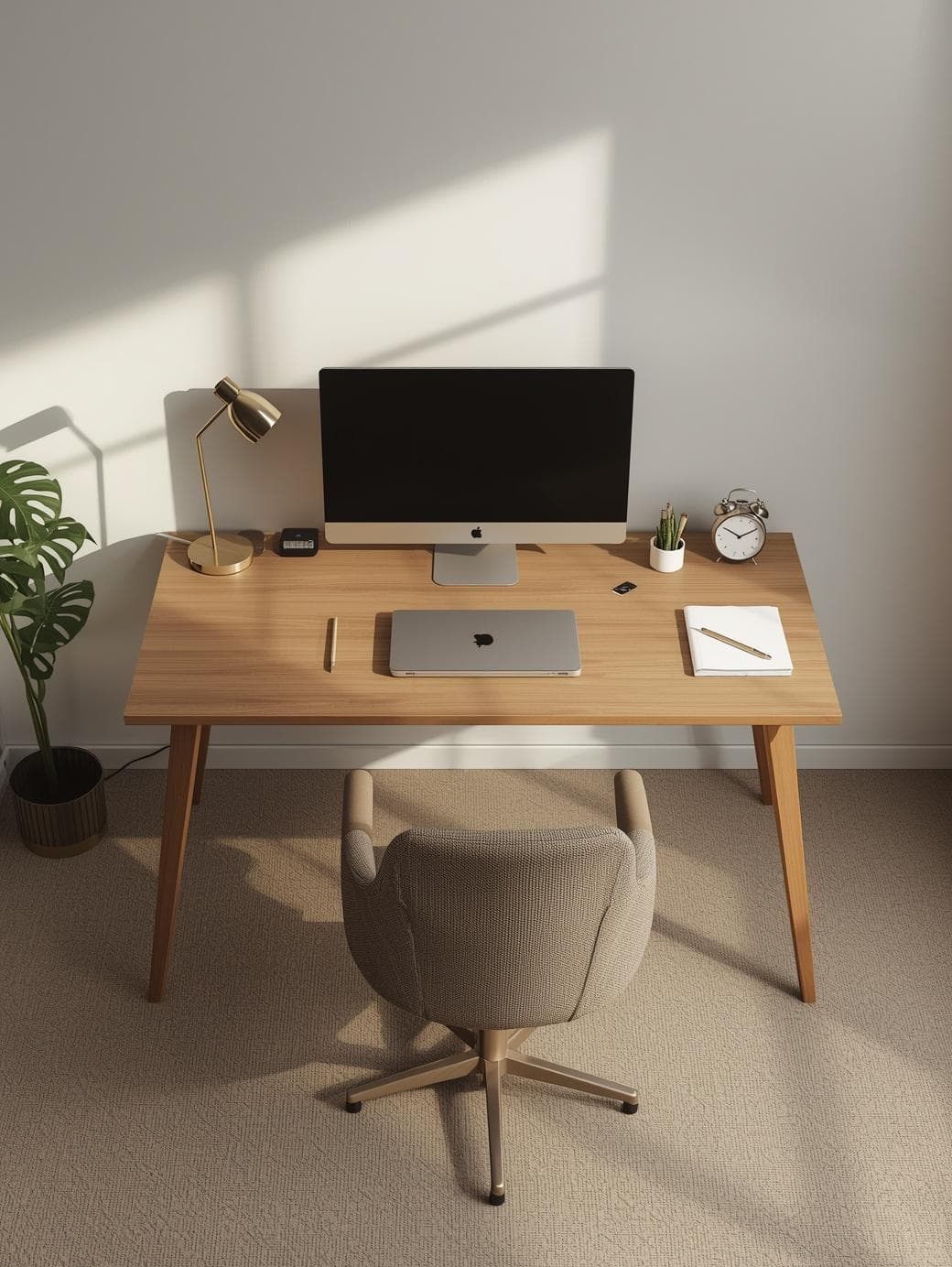
This warm minimalist desk setup combines clean lines, neutral colors, practical technology, and subtle decor to create a workspace that feels calm without looking empty.
Choose a Warm Wooden Desk
A natural wood desk adds warmth and character to a minimalist home office. Light oak, ash, and warm-toned wood pair beautifully with white walls, beige fabrics, and soft neutral decor.
Choose a desk with enough space for your computer, notebook, lamp, and daily essentials. Keeping the surface simple helps the workspace feel open and organized.
Position Your Desk Near Natural Light
Natural light can make a home office feel brighter, larger, and more inviting. Place your desk near a window when possible, but avoid positioning the screen directly in front of intense sunlight to reduce glare.
Soft morning or afternoon light can also create beautiful shadows and give a simple workspace more depth.
Invest in a Comfortable Office Chair
A stylish chair should also provide proper comfort and support. Look for an ergonomic design with supportive cushioning, a comfortable backrest, and adjustable features if you spend several hours at your desk.
Neutral upholstery can soften the appearance of a modern workspace while blending naturally with warm wood furniture.
Keep the Desk Clutter-Free
A clean desk can reduce visual distractions and make it easier to focus. Keep only the items you regularly use within reach, such as your computer, notebook, pen, and desk lamp.
Store cables, chargers, documents, and less frequently used accessories in drawers or organizers.
Create a Simple Computer Setup
A centered monitor creates a balanced and professional workspace. Pair it with a laptop, wireless keyboard, or minimal accessories to keep the setup functional without making it feel crowded.
Use cable clips, hidden power strips, or an under-desk cable tray to maintain a clean appearance.
Add Warm Task Lighting
A small desk lamp provides focused lighting for reading, writing, or working in the evening. Brass, black, wood, or neutral finishes can add subtle contrast to a minimalist desk.
Warm lighting creates a cozy atmosphere and prevents the office from feeling too cold or clinical.
Bring Nature into the Workspace
Indoor plants add color, texture, and life to a simple home office. A small desk plant can provide a subtle natural accent, while a larger plant can fill an empty corner.
Choose low-maintenance plants if the workspace receives limited sunlight.
Use a Calm Neutral Color Palette
Warm white, beige, cream, taupe, light gray, and natural wood tones create a peaceful foundation for a home office.
A restrained color palette makes the room feel cohesive and allows natural textures and carefully selected decor to stand out.
Leave Some Empty Space
Minimalist design is not about removing everything. It is about giving useful and meaningful items enough room to breathe.
Leaving open space on the desk and walls can make even a small office feel larger and more peaceful.
Add Only a Few Personal Details
A notebook, favorite book, framed print, small plant, or meaningful object can make the workspace feel personal without creating clutter.
Choose items that inspire you or support your daily routine rather than adding decor simply to fill empty areas.
Create a Dedicated Work Zone
Even if you do not have a separate office, creating a dedicated workspace can help establish a clearer boundary between work and relaxation.
A quiet bedroom corner, unused wall, hallway nook, or living room area can become a functional home office with the right desk and lighting.
Prioritize Function Over Decoration
Every item in a productive workspace should serve a purpose. Before adding something new, consider whether it improves comfort, organization, focus, or creativity.
A functional office is easier to maintain and more enjoyable to use every day.
Keep Technology Organized
Use a laptop stand, monitor riser, wireless accessories, and cable organizers to create a streamlined desk setup.
Keeping technology organized can improve both the appearance and usability of the workspace.
Make the Space Comfortable
Add softness with an upholstered chair, textured rug, curtains, or subtle fabric accessories. These elements can make a minimalist office feel warm and welcoming rather than plain.
Comfort is especially important when the workspace is used for long study or work sessions.
Design a Workspace That Supports Your Routine
The best home office is one that fits the way you work. Keep frequently used items nearby, maintain clear desk space, and choose furniture that supports comfort throughout the day.
A calm workspace can make it easier to begin tasks, stay organized, and maintain focus.
Final Thoughts
A beautiful home office does not need excessive decoration. Warm wood, natural light, comfortable furniture, organized technology, and a few thoughtful details can create a workspace that feels both productive and peaceful.
Start with the essentials, remove unnecessary clutter, and gradually personalize the space around your daily needs.
Save these minimal home office ideas for your future workspace makeover and explore more interior inspiration from Vikore Vana.
Enjoyed This
Article
Enjoyed this look? Share it