Living Room
12 Japanese Living Room Ideas for a Calm, Minimal, and Nature-Inspired Home
Discover Japanese living room ideas featuring natural wood, low furniture, warm neutral colors, soft lighting, indoor plants, and minimalist decor to create a peaceful home.
12 Japanese Living Room Ideas for a Calm, Minimal, and Nature-Inspired Home
Japanese interior design is admired for its calm atmosphere, natural beauty, and thoughtful simplicity. Instead of filling a room with excessive furniture and decoration, Japanese-inspired homes focus on comfort, balance, craftsmanship, and a meaningful connection to nature.
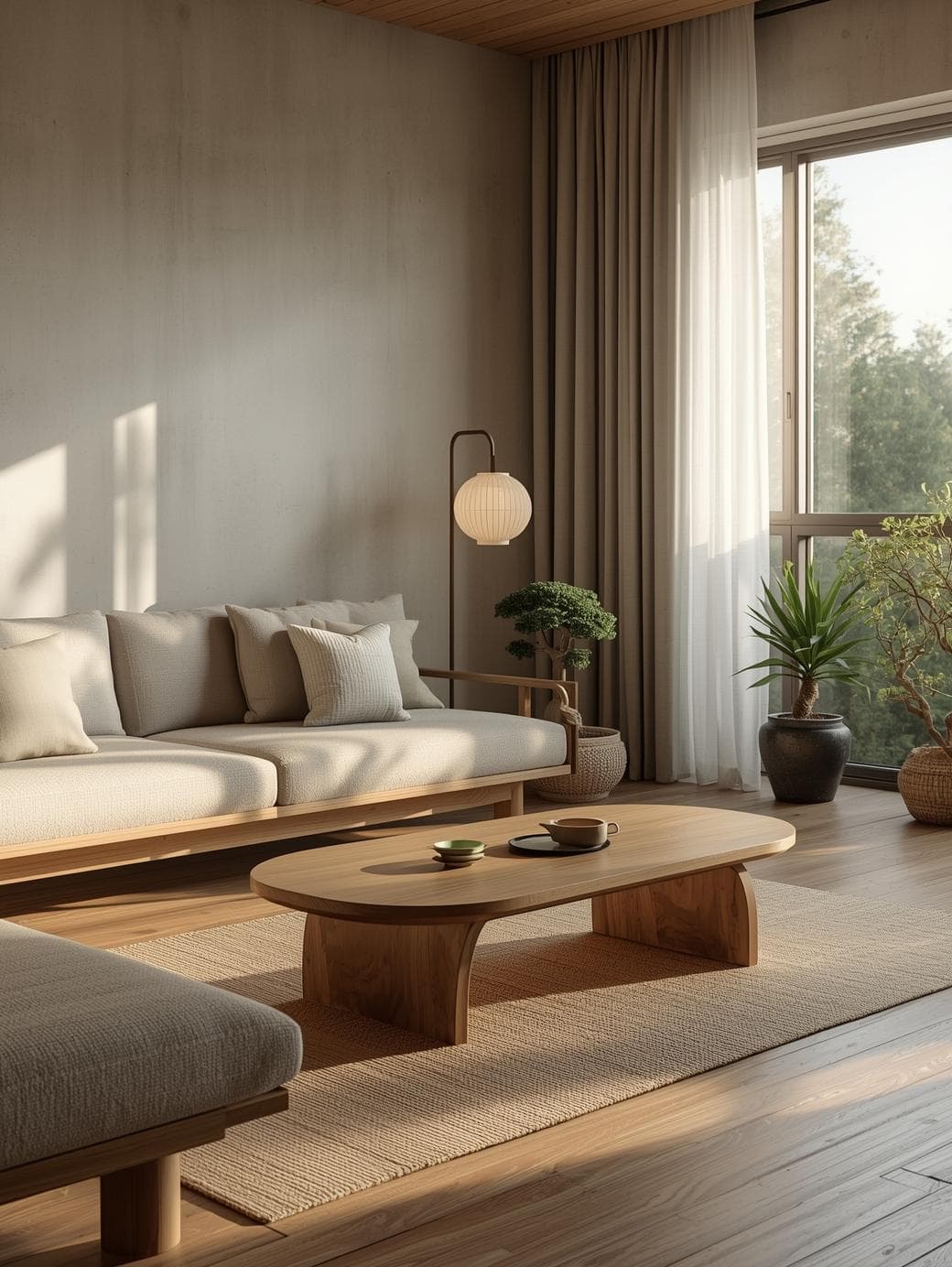
This warm living room captures many elements associated with modern Japanese design. Low wooden seating keeps the room visually open, soft neutral fabrics create comfort, and a sculptural wood coffee table becomes a subtle focal point. Natural sunlight, indoor plants, layered curtains, and gentle lighting make the space feel peaceful without appearing empty.
A Japanese-inspired living room does not need to follow strict traditional rules. You can introduce the style gradually by choosing natural materials, reducing visual clutter, and creating a layout that supports relaxation and everyday life.
Choose Low-Profile Furniture
Low furniture is one of the most recognizable features of Japanese-inspired interiors.
A low sofa creates a stronger visual connection with the floor and makes the ceiling appear higher. It can also help the room feel more open because the furniture does not block views across the space.
Choose seating with a simple wooden frame, clean lines, and comfortable cushions. Warm oak, ash, beech, and walnut can bring natural character into the room.
Keep the furniture arrangement open and avoid adding more seating than the space requires. A few carefully selected pieces often create a calmer environment than several bulky items.
Use Natural Wood Throughout the Room
Wood brings warmth, texture, and a connection to nature into Japanese interiors.
In this living room, wood appears in the sofa frame, coffee table, ceiling, and flooring. Repeating the same material helps the space feel balanced and cohesive.
Choose wood with visible grain and a natural finish rather than highly polished surfaces. Small variations in texture can make the room feel more authentic and welcoming.
You do not need to use the exact same wood tone everywhere. Related shades can create depth, but avoid combining too many contrasting finishes in one room.
Create a Warm Neutral Color Palette
Japanese-inspired interiors often use colors found in nature.
Warm white, cream, beige, sand, taupe, soft brown, muted gray, and natural wood tones create a peaceful foundation. These colors reflect light gently and allow textures to become more noticeable.
Use lighter shades on larger surfaces such as walls, curtains, rugs, and sofas. Add deeper colors through wood, ceramics, planters, and small decorative details.
A neutral palette should not feel cold or lifeless. Layering several warm tones creates depth while preserving a calm atmosphere.
Embrace the Beauty of Wabi-Sabi
Wabi-sabi is a Japanese philosophy that appreciates simplicity, natural aging, and the beauty found in imperfection.
In interior design, this may appear through handmade pottery, uneven textures, visible wood grain, weathered materials, or objects that develop character over time.
Instead of making every surface perfectly smooth and identical, allow natural materials to show subtle variations.
Choose decor that feels meaningful and enduring rather than replacing items whenever trends change.
Wabi-sabi encourages a home to feel personal and lived-in—not unfinished or neglected.
Keep the Layout Open and Uncluttered
An open layout allows light and movement to flow naturally through the room.
Begin with the furniture you genuinely need. A comfortable sofa, coffee table, rug, and one or two lighting sources may provide a complete foundation.
Leave clear walking paths between furniture and avoid filling every empty corner.
Open space is not wasted space. It gives important design elements room to stand out and can make the living room feel more relaxing.
Choose a Sculptural Wooden Coffee Table
A simple coffee table can become the focal point of a minimalist room.
The curved wooden table in this space adds softness and visual interest without relying on bold colors or excessive decoration. Its organic shape balances the straight lines of the windows and sofa.
Look for tables with rounded edges, visible wood grain, and a handcrafted appearance.
Keep the tabletop simple. A ceramic cup, small tray, book, or handmade bowl may be enough to create a thoughtful arrangement.
Bring Nature Indoors
Japanese design emphasizes a close relationship between indoor spaces and the natural world.
Indoor plants can soften architectural lines and add life to a neutral room. Choose a few plants with distinctive shapes rather than filling every surface with greenery.
Place larger plants near windows where they can receive suitable light. Smaller plants can be used beside furniture or on low stands.
Natural views are also part of the design. Keep windows open and uncluttered when possible so trees, gardens, and changing daylight become part of the interior.
Layer Sheer and Textured Curtains
Curtains influence both the lighting and atmosphere of a room.
Sheer curtains soften direct sunlight while preserving brightness and a visual connection with the outdoors. Heavier neutral curtains provide privacy and make the space feel warmer in the evening.
Hang curtains close to the ceiling to emphasize height and create a more elegant appearance.
Choose linen-inspired or lightly textured fabrics in cream, beige, taupe, or warm gray to complement the natural palette.
Add Soft, Warm Lighting
Lighting should create comfort without becoming visually overwhelming.
Paper-inspired lanterns and softly diffused lamps work beautifully in Japanese interiors because they produce a gentle glow. Simple wooden or dark metal frames can add structure without distracting from the rest of the room.
Use several subtle light sources rather than relying entirely on one bright ceiling fixture.
A floor lamp beside the sofa can create a peaceful reading corner, while warm accent lighting can make the room feel more intimate after sunset.
Use Texture Instead of Excessive Decoration
Minimalist interiors become more inviting when they include a variety of natural textures.
Combine woven rugs, soft upholstery, linen curtains, textured cushions, smooth ceramics, and visible wood grain.
These materials add depth while maintaining a restrained color palette.
Avoid using too many bold patterns. If you include a pattern, choose something subtle and inspired by nature or traditional craftsmanship.
Texture creates visual interest without making the room feel busy.
Choose Decor with Purpose
Japanese-inspired design values intentionality.
Instead of filling shelves and tables with small accessories, select a few objects that are useful, meaningful, or beautifully crafted.
A handmade ceramic bowl, favorite book, simple vase, or small piece of art can have more impact when surrounded by open space.
Before adding an object, consider whether it improves the room’s function, atmosphere, or personal meaning.
A carefully edited room is also easier to clean and maintain.
Create a Space That Encourages Slower Living
The most important quality of a Japanese-inspired living room is not a specific piece of furniture. It is the feeling the room creates.
Design the space around quiet daily moments: enjoying tea, reading near the window, talking with family, listening to music, or simply resting.
Keep comfortable seating near natural light and avoid allowing technology to dominate every view.
Your living room should support the way you want to feel at home—not only how you want the room to appear.
How to Recreate This Japanese-Inspired Living Room
Begin with a warm neutral foundation using soft beige, cream, taupe, and natural wood.
Choose a low-profile wooden sofa with comfortable neutral cushions. Add a sculptural wood coffee table and a textured rug to define the seating area.
Use sheer curtains to soften daylight and heavier outer curtains for warmth and privacy.
Place a softly glowing floor lamp beside the sofa, then introduce a few indoor plants near the windows.
Keep decor minimal and intentional. Add only a small number of ceramics, books, or handcrafted objects.
The finished room should feel warm, functional, open, and connected to nature.
Final Thoughts
A Japanese-inspired living room is built around simplicity, balance, natural materials, and thoughtful living.
Low furniture creates openness, while natural wood adds warmth. Neutral colors provide a calm foundation, and plants strengthen the connection between the home and nature.
The goal is not to remove personality or make the room feel empty. It is to create a space where every object has room to breathe and every design choice contributes to comfort.
By reducing unnecessary clutter, choosing enduring materials, and allowing natural light to shape the room, you can create a living space that feels peaceful throughout the day.
Save these Japanese living room ideas for your future home makeover and explore more calming interior inspiration from Vikore Vana.
Enjoyed This
Article
Enjoyed this look? Share it